Review
How MapDiff Is Transforming Inverse Protein Folding?
 Yasin Polat
 the Omics · Review
How MapDiff Is Transforming Inverse Protein Folding?
Have you ever wondered if proteins, shaped by billions of years of evolution, could now be redesigned on a computer screen with just a few lines of code? Could an AI model directly 'design' the protein needed for treating a disease instead of traditional lab work?
These questions sounded like science fiction until recently. But a collaboration between the University of Sheffield, AstraZeneca, and the University of Southampton has brought this idea closer to reality. The study was published in Nature Machine Intelligence, marking a significant scientific milestone.
Inverse Protein Folding: Solving a Complex Puzzle
Proteins are the building blocks of life, each folding into a specific 3D structure to perform its function. In the field of "inverse protein folding," scientists try to do the reverse: find the amino acid sequence that will fold into a desired 3D structure.
This is critical for drug development. Controlling a protein's shape and function means we can design it to recognize and neutralize disease targets. However, proteins are extremely complex, and classical computational methods often fail to predict correct sequences.
MapDiff: A New Map for Protein Engineering
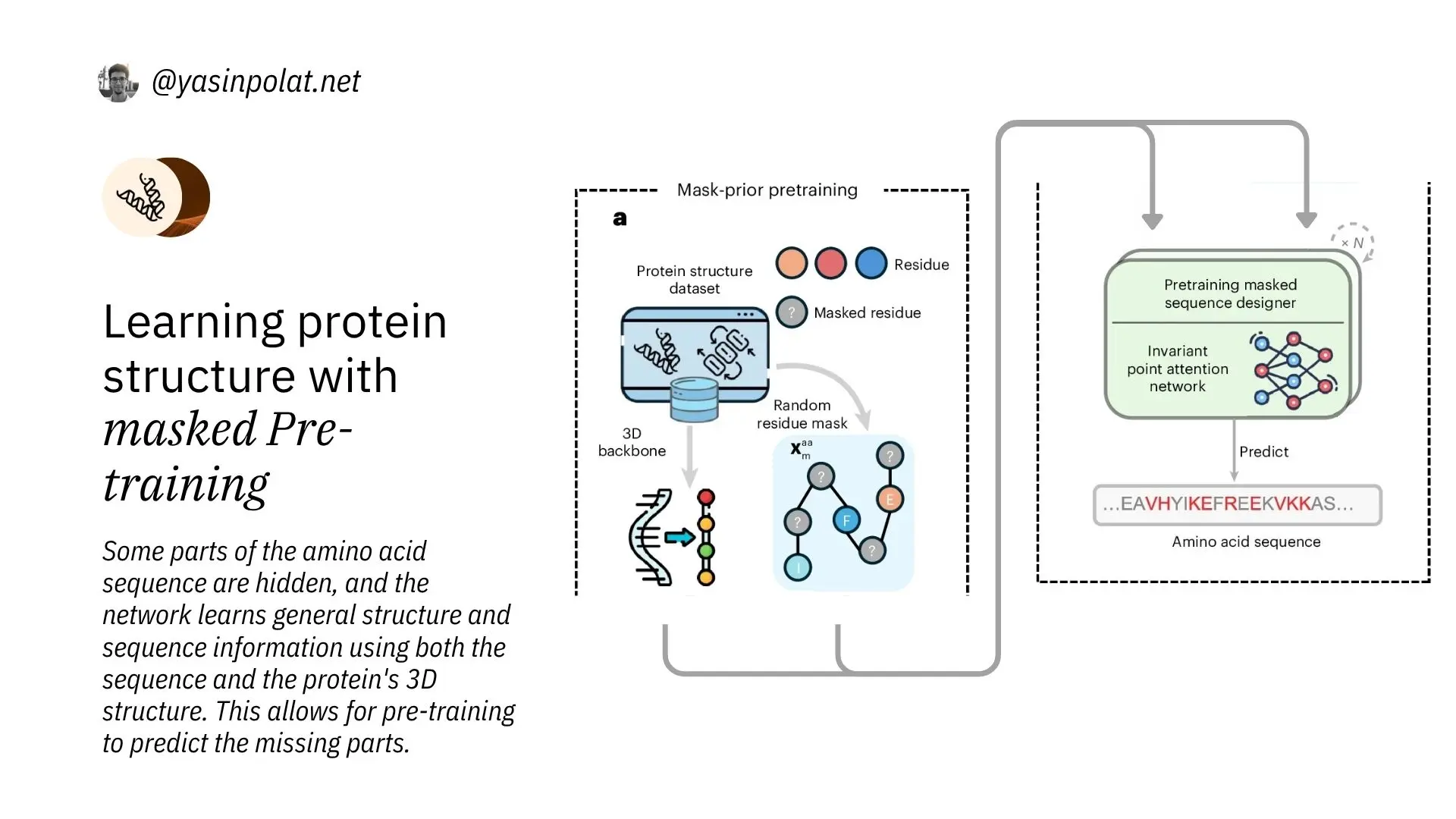
Here, AI comes into play. The University of Sheffield, in collaboration with AstraZeneca and Southampton, developed a new machine learning framework — MapDiff — which outperforms previous AI methods.
Simply put, MapDiff attempts to 'discover' amino acid sequences that match a desired protein structure. It uses an advanced technique called mask-prior-guided denoising diffusion. The results surpass previous models, demonstrating impressive accuracy.
This breakthrough is not only a technical achievement but also has the potential to transform biotechnology and drug development. It could accelerate the design of new vaccines, gene therapies, and cell-based treatments.
AI at the Intersection of Science
Prof. Haiping Lu from Sheffield University summarizes the study:
"This work represents a significant step forward in using AI to design proteins with desired structures. By learning how to generate amino acid sequences that are likely to fold into specific 3D structures, our method opens new possibilities for designing new therapeutic proteins, which can be used in various therapeutic applications. It’s exciting to see AI helping us tackle such a fundamental challenge in biology."
This is more than software; it’s translating human intuition about nature into algorithms. Peizhen Bai from AstraZeneca, who developed the model during his PhD, emphasizes AI's potential to accelerate biological discovery.
Perhaps this marks a new era in science: AI no longer just analyzes data — it reshapes the building blocks of life.
MapDiff and Beyond
This work builds on Sheffield’s previous collaboration with AstraZeneca: DrugBAN, an AI predicting drug-target binding, which became one of the most cited papers in Nature Machine Intelligence in 2023.
MapDiff takes it further. The goal is no longer just binding; it’s designing entirely new proteins, potentially speeding up drug development and reducing costs significantly.
Conclusion: Rewriting the Code of Life?
These advances raise a crucial question: Can we recreate the solutions nature evolved over billions of years using AI?
In the near future, researchers may consult models like MapDiff rather than a lab when developing a new therapy. And then, "protein design" will take on an entirely new meaning.
Bültenime Abone Olun
Tüm güncellemeleri doğrudan benden almak için abone ol!