Review
Why Has Single-Cell Omics Become So Important?
 Yasin Polat
 the Omics · Review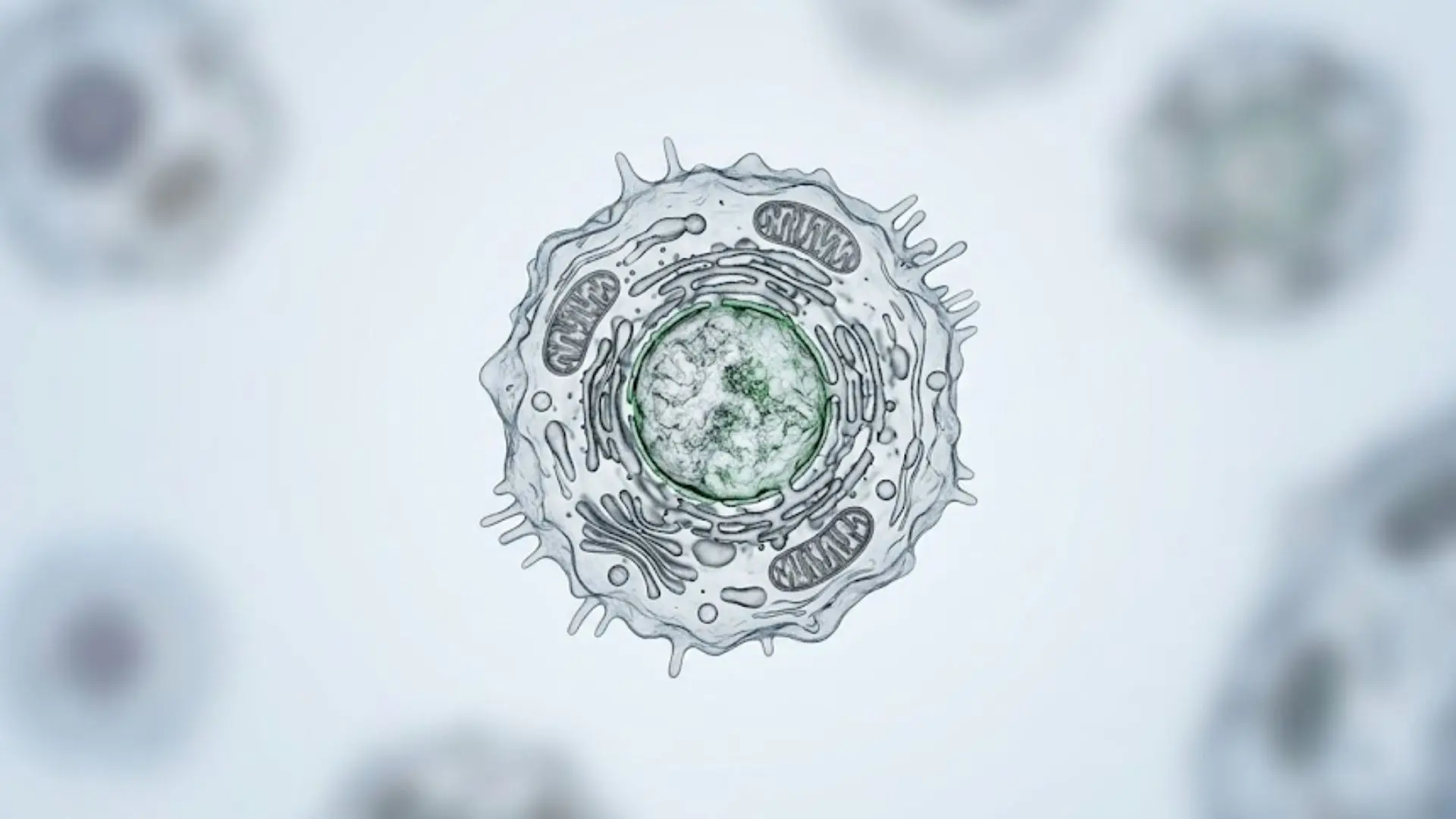
Biology has long progressed through averages. When a tissue sample is analyzed, the resulting data represents the combined behavior of millions of cells. This approach was functional, but limited. It smooths out the differences within the system. But do all cells in the same tissue really do the same thing? Do they produce the same signals? Do they respond in the same way?
Once you take this question seriously, you begin to see how misleading the concept of an average can be. Biological systems are not homogeneous. On the contrary, they are highly heterogeneous. Cells within the same tissue can activate different genes, follow different metabolic pathways, and have entirely different fates. This is exactly where single-cell omics comes into play.
Consider a tumor. From the outside, it appears as a single structure. But when you look closer, it is actually composed of distinct subpopulations. Some cells proliferate rapidly, some remain dormant, and others develop resistance to treatment. Traditional analyses reduce these differences into an average signal. Single-cell approaches reveal them directly. This is not just about generating more data, but about seeing a more accurate version of reality.
Why Has Single-Cell Omics Become So Important?
Traditional omics analyses often capture a single moment. Like a snapshot. They show which genes are active and which proteins are present at that specific time. But biology is not static. Cells are constantly changing, responding to their environment, and differentiating. The critical question is this: how do cells evolve over time?
Have you ever considered how a stem cell becomes a specific cell type? Which genes turn on first, and which ones turn off? Or how an immune cell responds step by step when it detects a threat? Single-cell omics makes it possible to approach these questions. By tracking cells individually, we begin to see transitions within a process. This allows us to read biology as a flow rather than a fixed state. This perspective is already reshaping fields like developmental biology and disease progression. Game-changing insights in biological analysis
More Data, or More Complexity?
As single-cell technologies advance, the volume of data has increased rapidly. It is now possible to measure not only gene expression, but also epigenetic states, chromatin structure, and protein levels from the same cell. This sounds powerful, because it gives us more information. But a critical question emerges: does more data actually mean more understanding? (It is worth pausing on this.)
In many cases, the answer is not straightforward. Generating data and interpreting it are not the same thing. In fact, as data grows, interpretation often becomes more difficult. Integrating multiple layers, filtering noise, and extracting biologically meaningful insights has become a serious challenge. The limits of AI in biological interpretation
Today, many research groups can generate large datasets. But only a small number can turn that data into real insight. This is why the main bottleneck in the field is no longer technology. The real challenge lies in interpretation and integration. In other words, the problem is no longer collecting data, but asking the right questions and knowing how to read it.
Why Now?
The rise of single-cell omics is driven by several key developments. Sequencing costs have dropped significantly. Experimental methods have become more accessible. Computational power and data infrastructure have improved. Together, these factors have made advanced analyses available to a much broader research community.
More importantly, it has become clear that averages are no longer sufficient to understand biology. To capture the true nature of biological systems, higher resolution is required. Single-cell omics directly addresses this need. It is not simply about breaking biology into smaller parts. It is about reconstructing it more accurately. Instead of simplifying complexity, it embraces it and tries to make sense of it.
In the coming years, the ones who stand out will not be those who generate the most data. The real advantage will belong to those who can turn data into meaningful narratives. Because in biology, progress is not measured by the amount of data, but by the meaning extracted from it.
Bültenime Abone Olun
Tüm güncellemeleri doğrudan benden almak için abone ol!