Podcast
How Effective is AI in Biology?
 Yasin Polat
 the Omics · Podcast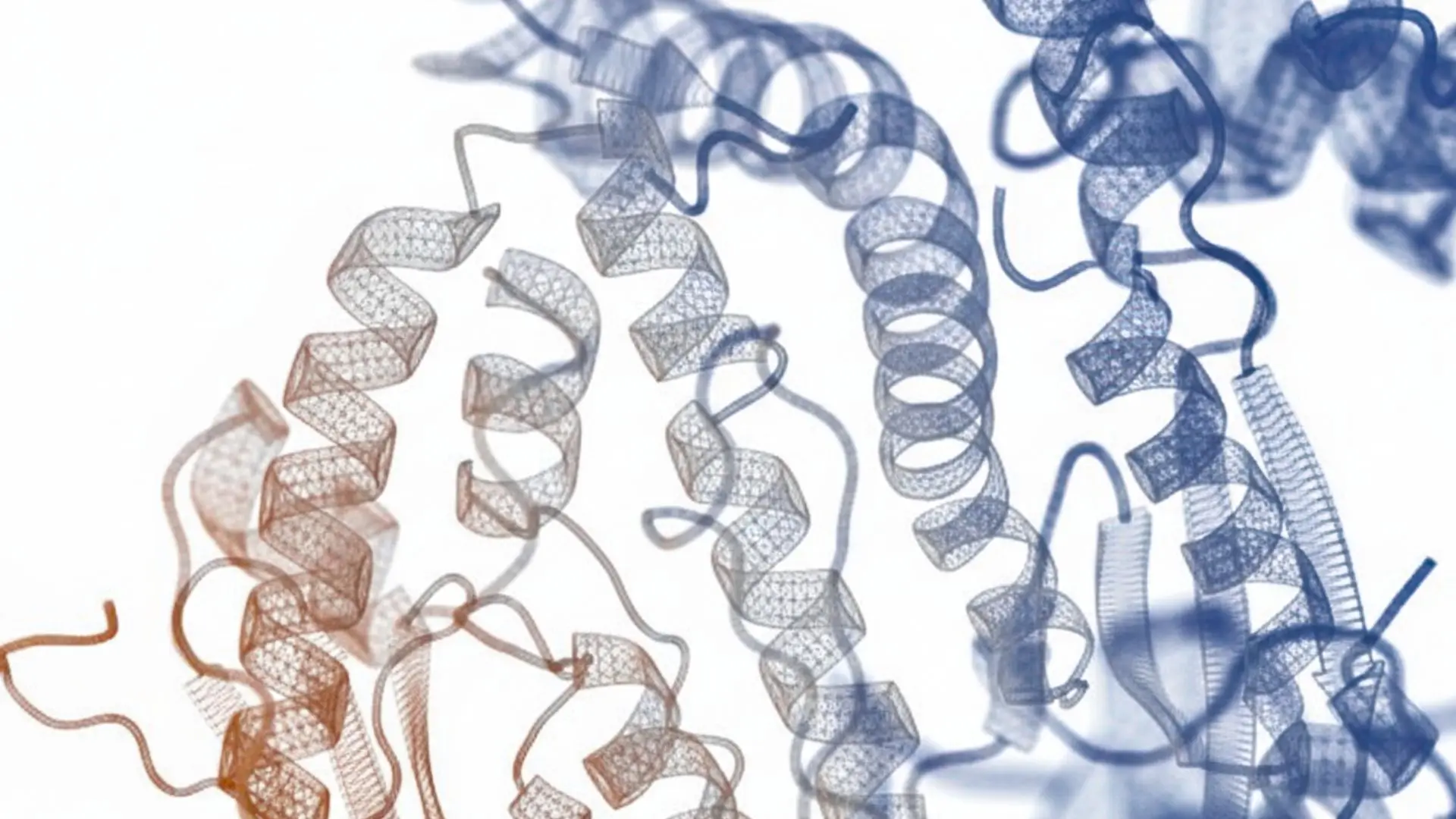
In recent years, it has become almost impossible to discuss biology and medicine without mentioning artificial intelligence. Similar claims appear repeatedly across academic publications, popular science articles, and the investment world: AI is solving diseases, discovering new drugs, and fundamentally reshaping biology.
Some of these claims are grounded in genuine, scientifically meaningful progress. Others, however, inflate expectations and detach results from their proper context. The goal of this article is neither to glorify artificial intelligence nor to dismiss it. Instead, it aims to provide a realistic assessment (through the lens of biology and bioinformatics) of where AI truly delivers value today, where it performs well, and where its limitations remain substantial.
This is not a discussion driven by headlines, but by data and real-world applications. Where does AI produce meaningful biological insight, and where does it turn into an overconfident narrative? Let’s examine this carefully.
A Genuine Breakthrough: Solving Protein Structures
We should begin with an example that genuinely deserves to be called a breakthrough. One of the clearest, most measurable, and long-lasting impacts of AI in biology has been in protein structure prediction.
Proteins are responsible for nearly every function within the cell—enzymes, receptors, transporters, and structural components are all proteins. However, understanding what a protein does requires more than knowing its amino acid sequence. Its three-dimensional structure (how it folds in space) is critical, because function is directly determined by structure.
For decades, protein structures were determined using experimental techniques such as X-ray crystallography, NMR spectroscopy, and cryo-electron microscopy. These methods are powerful, but they are also expensive, slow, and not universally applicable. Solving the structure of a single protein could take months or even years, and many attempts failed altogether.
This is where AI created a genuine shift. Models capable of predicting three-dimensional protein structures directly from amino acid sequences reached a level of accuracy that made the problem practically tractable. Performance benchmarks demonstrated that structure prediction was no longer merely an academic challenge, but a usable scientific tool.
More importantly, this progress did not remain confined to publications or demonstrations. Large-scale, openly accessible databases containing predicted structures for hundreds of millions of proteins became available. This level of access has no historical precedent in biology.
These models are not perfect. They struggle with highly dynamic proteins, multi-protein complexes, and context-dependent conformations. Still, they provide researchers with an exceptionally strong starting point.
The practical consequence is clear: Instead of spending months asking “What is the structure of this protein?”, researchers can now move directly to “How can I target or modify this structure?” Drug discovery, protein–protein interaction studies, and functional analyses have all benefited from substantial reductions in time and cost.
This distinction matters. Protein structure prediction via AI is not a marketing story. It is not speculative optimism. It represents the successful management of a highly specific, long-standing biological problem—and it stands as one of the most honest examples of AI’s real value in biology.
Drug Discovery and Antibiotic Resistance: Powerful, but Not Autonomous
Another area where AI has made tangible contributions is drug discovery. Developing a new drug remains an extremely long and expensive process. Target identification, compound screening, laboratory validation, animal studies, and clinical trials often span more than a decade and consume vast financial resources - most of which are lost to failure.
AI’s contribution is most visible in the early stages: candidate screening and prioritization. Evaluating millions or billions of chemical compounds for potential biological activity is a problem far beyond human-scale analysis.
Machine learning models trained on known drug–target interactions can estimate the likelihood that previously untested molecules will bind to a biological target. This significantly reduces the number of candidates that need to be tested experimentally.
One of the most widely discussed examples emerged in the context of antibiotic resistance—a growing global health crisis. Traditional discovery pipelines have failed to produce new antibiotic classes for decades, while resistance continues to rise.
In this context, AI-assisted screening identified candidate molecules with antibacterial potential that had been overlooked by conventional methods. These compounds displayed chemical features distinct from existing antibiotics and demonstrated activity against drug-resistant bacteria in laboratory settings.
A critical clarification is necessary here:
AI did not invent these drugs. What it did was highlight regions of chemical space that humans had ignored or undervalued.
This is a meaningful contribution but also a bounded one. Turning a candidate molecule into a real drug still requires extensive experimental validation, toxicity assessment, and clinical testing. AI has not eliminated the slowest and riskiest stages of drug development.
In short:
AI accelerates drug discovery, but it has not overcome the fundamental complexity of human biology.
Where Hype Begins to Outpace Reality
This is where restraint becomes essential. Not every AI application in biology represents genuine progress. In some domains, expectations have clearly outgrown reality.
The most common example is the claim that AI is “solving cancer.” Cancer is not a single disease. It encompasses thousands of biologically distinct conditions across tissues, genetic backgrounds, and molecular mechanisms. An AI model that classifies cancerous cells in a dataset has not “solved cancer.” At best, it has improved detection or categorization.
A recurring mistake is the conflation of diagnosis with mechanism, and classification with causality. AI can identify patterns extremely well but it does not understand the biological processes that generate them. Without mechanistic insight, durable therapeutic advances are impossible.
Data quality presents another fundamental limitation. AI systems are only as reliable as the data they are trained on. Biological data are often noisy, incomplete, and inconsistent. Differences in experimental protocols, equipment, and laboratory conditions can lead models to learn technical artifacts instead of biological signals.
There is also the black-box problem. Many high-performing deep learning models produce accurate predictions without offering interpretable explanations. In biology and medicine, the question “why?” is not optional. Without understanding why a model makes a prediction, translating it into clinical decision-making carries significant risk.
AI is a powerful analytical tool but it does not replace biological understanding.
Looking Forward: AI and Synthetic Biology
The most promising future applications of AI in biology may lie at its intersection with synthetic biology. Up to now, many AI systems have focused on interpreting natural biological systems. Synthetic biology shifts the goal from understanding to design.
AI models are increasingly capable of proposing protein sequences, enzymes, and genetic circuits intended to perform specific functions even ones not found in nature. This opens possibilities in environmental remediation, industrial biotechnology, and sustainable manufacturing.
However, design does not equal deployment. Every proposed biological system must still function inside living cells, remain stable, avoid toxicity, and interact appropriately with its environment. These constraints cannot be resolved computationally alone.
For this reason, AI should not be viewed as a replacement for biologists. A more accurate framing is that AI strengthens and guides biological experimentation helping researchers decide where to look, not what to conclude.
Conclusion: Knowing Where to Stop
Artificial intelligence is not a magic solution for biology. But when applied to the right questions, it can dramatically accelerate research.
The central challenge is knowing where AI should stop. When positioned as a decision-maker, it risks overreach. When used as a tool that supports thinking, hypothesis generation, and experimental focus, it becomes genuinely valuable.
The goal here was not to praise or dismiss AI, but to draw a realistic boundary. True progress in biology emerges when this balance is maintained.
So the key question remains: Where should AI’s role in biology end and human judgment begin?
Bültenime Abone Olun
Tüm güncellemeleri doğrudan benden almak için abone ol!